
Welcome, Guest
Username Password: Remember me

Profile for CliffStamp

  • OFFLINE
  • Rank: Fresh Boarder
  • Register Date: 01 Aug 2012
  • Last Visit Date: 09 Dec 2012
  • Time Zone: GMT -5:00
  • Local Time: 15:43
  • Posts: 8
  • Profile Views: 88
  • Karma: 0
  • Location: Unknown
  • Gender: Unknown
  • Birthdate: Unknown

Signature

Posts

Posts

emo
Rlb wrote:

Just curious do you have data for the linear changes of performance with hardness?


Yes, as one example see "The Effects of Carbon Content, Matrix Hardness and Microstructure on the Wear of Steel Grinding Balls During Wet Copper Ore Grinding". Here 1090 carbon steel is examined for wear resistance when hardened from 64 to 31 HRC. The changes in wear (material lost) are linear incrementally. In regards to strength, hardness is a direct measure of compression strength, and the relation between hardness and tensile strength is linear and can be seen in any simple table where one is used to estimate the other.

I would assume some variation between different steels as well which would muddy the picture. If this was the case and microstructure was more indicative of performance or retention I would be willing to ascertain that hardness may have a congruent relationship with microstructure and retention.


This is the critical point, hardness is only a measurement of the materials resistance to being dented, if the hardness changes and the microstructure is the same class then you can make inferences, however blades at the same hardness can have vastly different properties if the microstructure is different (i.e. bainite vs martensite being an obvious striking example of difference in toughness at the same hardness).

As an example critical to edge holding, if a blade has a high level of retained austenite, even if it is hard as in 60 HRC, the edge will still be highly subject to localized rolling and chipping and denting in these patches of austenite as it is very soft. Similar the grain of the steel can have a large impact if it runs from spine to tip (blade and edge are very tough) vs spine to edge (blade and edge is now very fragile).


I agree with the bias statement, but without properly reported methods and lack of generated data it is hard to avoid. Consider a phase II drug trail where x many patients are given a new drug and are observed for adverse reactions.


Medical research is insanely difficult just for that reason, all of the bodies are different and all of the people will describe the exact same condition differently. It is why you have to just get so much of it and pool a big bunch of studies especially when you are dealing with people who can simply lie to you about what they did or ate or past history etc., and some who just do trials for the money. It makes looking a knives for sharpness, etc. trivial in comparison as you only have to deal with minor biases such as data forcing (i.e. we see what we want to see).

I have high standards and when I say it stopped slicing after 10 slices it still would but I actually had to move the blade as compared to just blowing right through it.


To be frank, if you are careful enough in how you measure sharpness, and you can do this by feel on paper, you should be able to detect a difference almost immediately as blunting is actually highly nonlinear so the change initially is extremely fast compared to later. As a rough rule of thumb, in order to see similar changes in blunting you have to keep doubling the material cut. This isn't an exact rule but it gives you an idea.

So when you are cutting paper you would check at 1, 2, 4, 8, 16, 32, 64, 128, 256, etc. . You can quickly see how it will appear that any blade will plateau very fast, this behaviour alone is responsible for some of the worst misconceptions about steel performance. You can see this in Dan's data, see how it changes sharply at first and then starts to slow down, this gets very dramatic later on.

It also produces curious effects such as if you are willing for example work with a blade at 5% of optimal sharpness vs 10% then AISI 420 will easily outperform S30V as it will take longer for AISI 420 to get to 5% vs S30V to get to 10% as they are in the very slow plateau region at that point.

This is one of the reasons why people who don't sharpen knives often, but let them go extremely dull don't tend to consider edge retention at all as they won't even notice any difference because once you get in the plateau of very low sharpness it takes forever for a blade to change any more regardless of the steel.
Question with a sebe ...
emo
Dan,

That makes sense to me, on the light thread I normally cut a Super Platinum razor blade is 30 (4) grams, if a knife even gets to within half of that at 60 grams it is extremely sharp, i.e., it is long since push cutting a tomato, newsprint, etc. . Most knives that people consider sharp such as the production Spyderco's will in general be about 2.5-3.5 times as high. It has been awhile since I hand polished to a very high grit, but getting past 60 is not easy so I would be curious if you could bring knives down to match the finish of the razor and if so how long and what grit was required.
Question with a sebe ...
emo
It might be interesting to set a few benchmarks which should be extremely high (or low as it were) :

-standard utility razor blades as-new
-double sided razor blades
-"shave ready" straight razor
Question with a sebe ...
emo
A simple fit will turn up :

Sebenza has an initial sharpness of 237 (5) the ZT was 283 (6). This difference of about 15% is significant (meaning it isn't random) both from the standard errors being much larger than the difference (it would pass a t-test for significant at 0.05%, and if you look at the data you can clearly see that while they are scattered, the Sebenza scatters around a lower value (and thus higher sharpness).

Now that just means *for this run* it was sharper, it does not mean that it always would be, Dan would need to sharpen a few more times and if the Sebenza was consistently sharper then an inference could be made about the steel. But I would bet that this small difference in sharpness is simply the expected variation, it isn't like you would expect the initial sharpness to be exactly the same each time you sharpened a knife.

The slope for the Sebenza was 1.35 (12) and for the ZT 1.39 (14), both of them showing a strong non-null value. This can be further checked as the F-statistic for both (136 and 92) easily pass the test of significance which show that the data do not remain constant, there is a statistically significant decrease in sharpness during the test. This is also, as Dan noted, easily verifiable in the data itself because you can see that towards the end the data flattens to a value about 100 g higher.

Dan if you want I can generate a template for that type of work which will generate all of these values and the graphs and email it back to you.

If you have the time/inclination you could carry the Sebenza and ZT and then periodically just record the sharpness and see how well the numbers match your perceptions. The ideal way would be for you to make your notes on the physical handling, and ask a friend to measure the forces and only look at the forces when you have decided to stop the experiment. This way you have reduced one of the largest possible sources of bias.
Question with a sebe ...
emo
BassLakeDan wrote:
If you could have a sebbie with CBN pressure forged blade made by DiamondBlade would you not instantly grab it from my hand or would I hear you say, well "No, thanks anyway Dan keep your hybrid there, i am fully satisfied that I would only get at most a +5% increase in performance on that.."


I would tend to have a high attraction to anything which is new/different as I am at heart and always will be an experimentalist. With that blade I am really curious as to how they will behave in long term wear as there is no data I can find or even extrapolate to in these cases. What we have is D2 flash-soaked to such a high temperature that massive amounts of the primary carbide have dissolved in the matrix. This allows the hardness to get up to 68 HRC and the corrosion resistance to be in the stainless class. But here is the kicker - in order to get this the carbide volume was severely reduced so where did the edge retention end up, it is harder but has less carbides.

Questions aside, I tend to prefer extreme type blades, but I know extreme type makers and those blades suit my preferences. I have for example 1095 blades at 68 HRC (small paring knife) which is just wonderful to sharpen (and of course use). It is so hard, the grain so fine, the edge is almost buttery smooth on the stone, it takes an extremely high polish without any effort and will take an edge which shaves above the skin, push cuts a tomato, etc. almost by accident. Yet, I can take the same blade and cut up sods outside with minimal damage as the hardness is right at the torsional toughness peak (pictures of all of that in the reviews).

That is an example where there is both a large change in hardness (about 10 points), a large change in microstructure (reduction in retained austenite) and very large change in torsional toughness (double if you compare the peak at about 325 F to the valley at about 500 F). If you combine all of these and the fact that the maker ground the knife accordingly to take advantage of it then you end up with a blade which can be many to one over another 1095 blade.


I notice that the sebbie makes it (sometimes) thru the end of the day before I find myself looking around for a handy hone ( I tend to use a Sypderco UF beach stone that I keep in my kitchen for that...), but when I ave the ZT it might take three or four days (or sometimes more!) before I even think about dressing it.


That is what I understood, that is really dramatic, assuming of course it is consistent on average. The first few questions that would come to mind are :

1) It is really blunting or just perceived to be - you can confirm that with the force cutting.

But there is a much harder one because again we are irrational beings :

2) Are you forcing the results because you expect them to happen? That sounds quite idiotic but it is one of the hardest problems to eliminate in research - hence double blind runs. One way to check this is to just loan the knife to a friend and ask them to return it when it needs to be sharpened and see what happens.

If it seems implied that I am using you/we in the singular sense I am not, the same thing happens to me all the time and I know it is going on, but still it isn't trivial to stop. As a recent example, I am in the middle of some edge retention work on kitchen knives. I started a group of very inexpensive blades, these are the ones marked simply "stainless", you can get them for <$10. I have another group of actual named blades like VG-10 etc. which I have called the mid-range group. The idea is to measure the edge retention of a bunch of these and then when I get another knife I can say where it is relative to the groups (I have another extreme group, the S90V class).

Now when I started the inexpensive knives I was getting a decent initial sharpness, when I started with the "better" knives my initial sharpness more than doubled. I expected this for various reasons. However after a number of posts on Spyderco's forum about placebo and bias I asked myself truly if I was not forcing the results. I was finishing on a very coarse stone (the fine side of a hardware store hone so this would be about 30 micron. If the finish is of this order should I really see any effect of aus-grain, carbide distribution, etc. . Probably not. I then did something which takes advantage of the fact that you are easily manipulate your subconscious and just kept repeating to myself how one knife in particular (one of the cheap ones) was very easy to sharpen to an extreme finish.

I then took that knife and what do you know I matched the sharpness I was getting on the more expensive knives. I then started working through all the other blades and with this bias broken all of them now fell in line and took the same quality of edge. Bias is the constant bane of any experiment and one of the things you always need to be asking yourself - is what I a seeing really due to what I think it causing it or could it be anything else. If you come up with anything you then have to find a way to make sure that is not the causal effect. At times I have always found it helpful to discuss with other people even if it is just to act as a sounding board.
Question with a sebe ...
emo
BassLakeDan wrote:

I thought the effect was more logarithmic and therefore the factor becomes very significant across the range of say: 56RC to 61RC.


Hardness itself would have a linear change, however if the microstructure changes then the effect would not be linear with hardness. The problem is that too much is attributed to hardness when it only measures one thing which is the resistance of the steel to compression on a fairly large scale. For example 1095 and D2 at 60 HRC have the same hardness but they do not wear at all the same as the microstructure is completely different.

As manufacturers do not say exactly how they HT their steels everyone ends up guessing which is made complicated because the reported properties are from a user group which tends to be fairly biased and you can get large sheep like tendencies as there are no blind/controls being used so a lot of care has to be taken. I am not saying that the choices Reeve makes are optimal, but I would take care in heavy extrapolation from the user reports.

The question that needs to be asked is why exactly are Reeve's knives slightly softer as there are many ways that they could be that way and all will produce different micro structures. For example he could simply reduce the soak temperature, put less carbon in solution. This will end up with a perfectly fine blade but it will suffer corrosion issues because the soak was not hot enough to get the chromium in solution. In general Reeve doesn't have common reports of easy corrosion (relative) so I don't think this is the case.

He could be doing a simple air quench (not oil or positive pressure) and no below room temperature quench and if he did this then the micro-structure would be adversely effected as instead of the ideal which is martensite with less than 5% retained austenite he would have other primary structures and a much higher fraction of retained austenite and possibly even embrittlement. If he is doing this then you could see effects beyond what you would expect from the small change in hardness.

I have seen the reports where people have had blades rehardened and they report excellent results, however I am always very leery of such reports as again that could just be expectation bias. As what you are doing is fairly quantitative and not overly influenced by subjectivity I am interested in your results. I would like to see, if you have the time/inclination if you would see a different relative performance if the edge was finished with a high and low polish.

If the Sebenza has a lower relative ability to hold the low grit finish it is a fairly strong indication of a micro-structure issue as the teeth are approaching the size of the micro-structure (micron scale).
Question with a sebe ...
emo
BassLakeDan wrote:
The question, properly phrased in relation to ...


As an aside, that was a very nice description of the problem, very elegantly worded.

In regards to performance, one thing to keep in mind is that however Reeve is hardening the steel, S30V / S35VN etc. the difference in performance can not be that dramatic. If you look at edge retention by heavy abrasion (CATRA) or micro-loading to measure sensitivity to roll/chipping, then it takes something major to make a multiple factor.

For example Leatherman's 154CM compared to AISI420 which is a dramatic difference in both hardness (likely 5+ points) and carbide volume difference of > 15% only produces a 3X difference in edge retention and in order to even get this you have to go to extremes and wear the edge down to under 10% of initial sharpness (blunting is nonlinear so the further you go the larger the gap you will see between steels).

As strength would be linear with hardness, a 1-2 point change in hardness could produce at most < 5% of a difference in strength. Now if Reeve is leaving large amounts of retained austenite in the steel there could be a more significant effect, but again I can't see how you could even get a 100% difference due to that as you are talking about maybe a 10-15% compositional change at maximum.

One thing to be really careful about is how perceptive bias will influence people. It only takes a very small amount of people to suddenly create the idea that there is a problem, people will then mob to that like sheep and see a problem when none exists. Unless you have people actually doing blind runs, which few people do - be very very careful as Elmer Fudd notes.

Again to clarify, I am not saying I agree with Reeves decision being optimal and I have said as much on his forum - but I can't see it being that dramatic of a difference either. This is physics after all and all of these properties have bounds on them. You can't take S35VN and drop the hardness point by one and all of a sudden it is acting completely different. Note that the difference between for example Reeve and Spyderco is likely smaller than the difference in either of their knives in-batch. It is common to see HT notes claim 1-3 HRC as the goal because the batch tolerances, thermocouple tolerances, etc. . all can easily produce a difference of that size.

All of that said, I would be interested in your results. By the way it is pretty simple to add a regression line to the results of the tape and then a simple t-test to check if the force statistically changed within a significance tolerance. If you send me the XLS sheet I can add that.
Question with a sebe ...
emo
Rlb wrote:
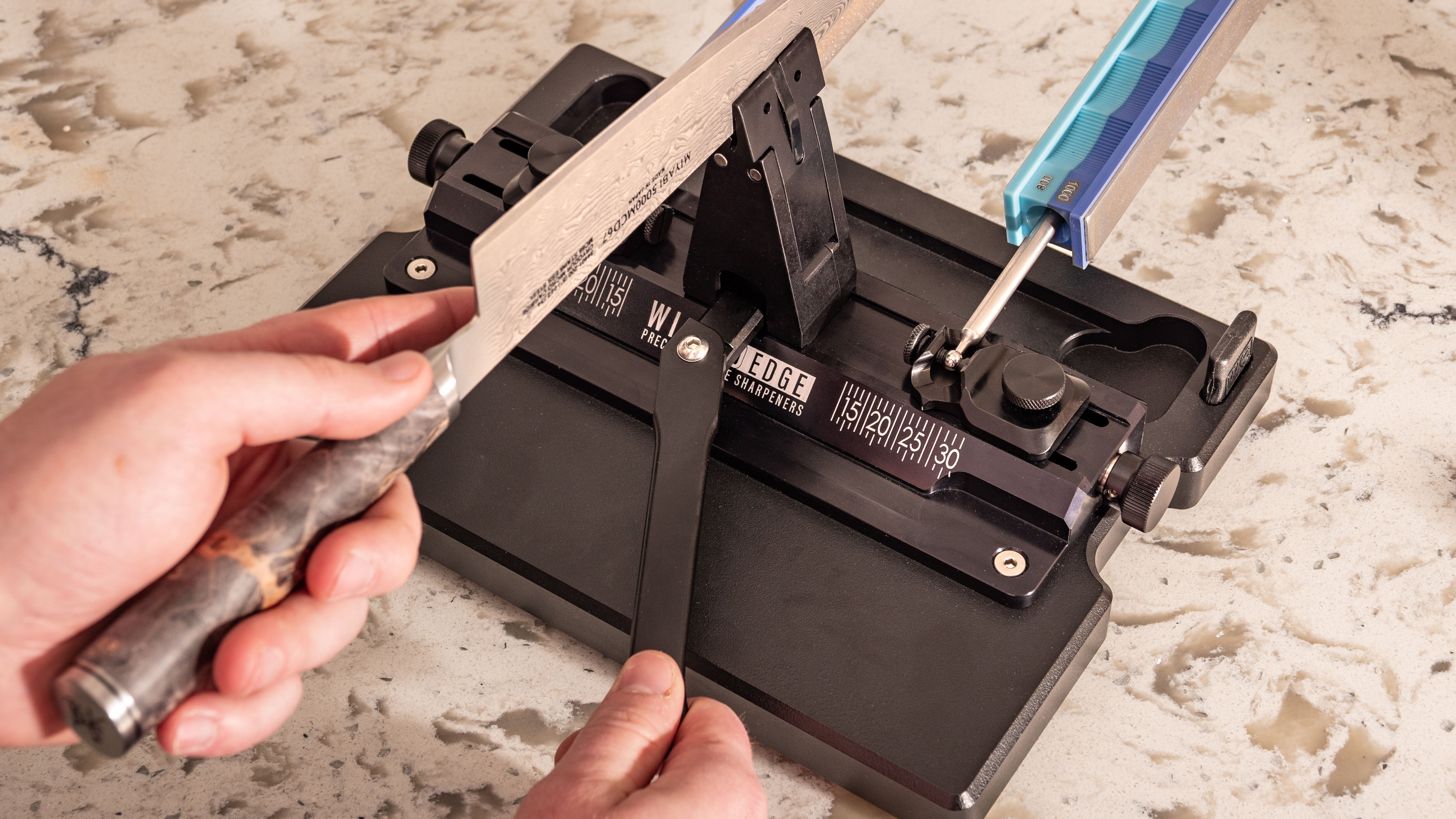
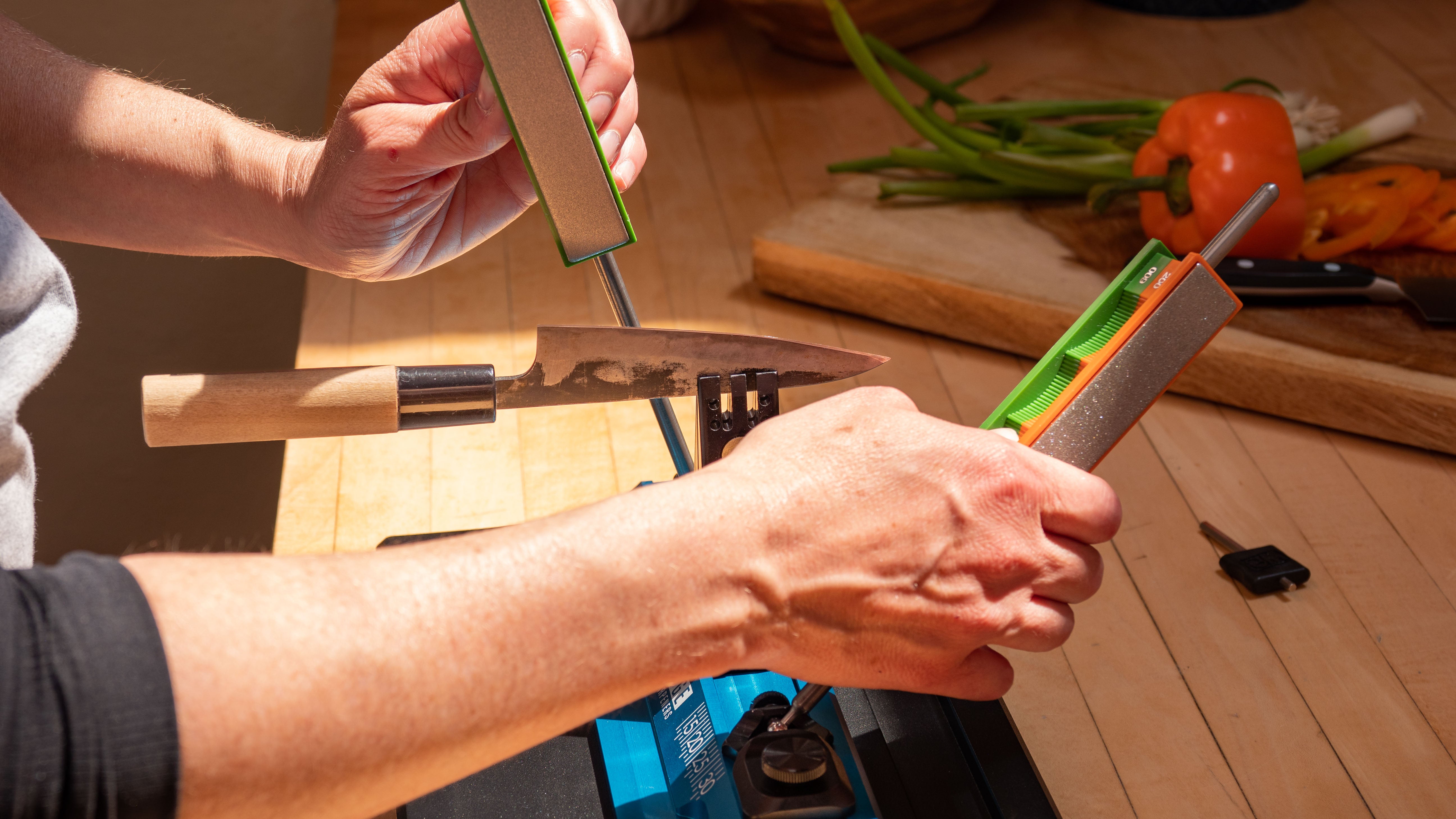
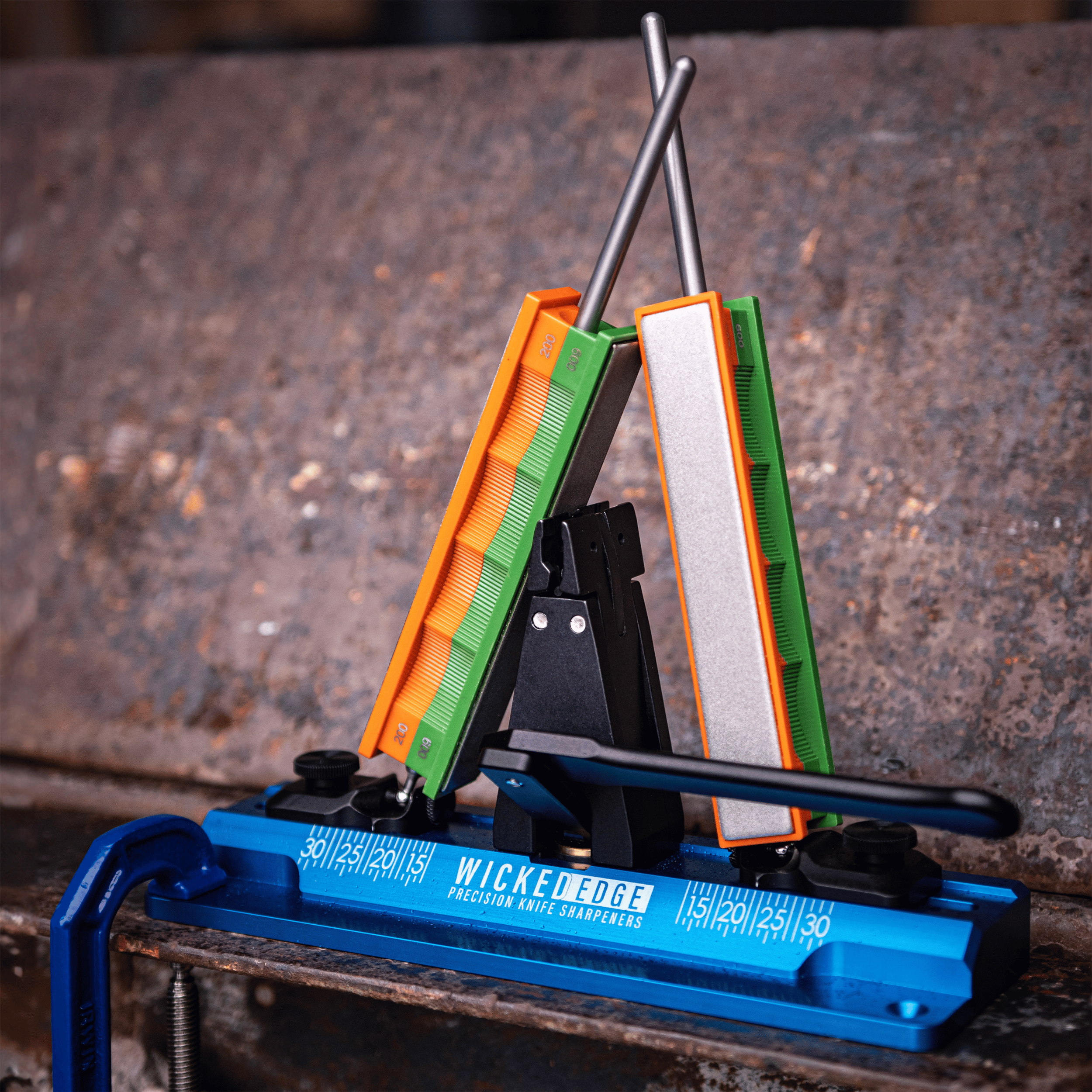
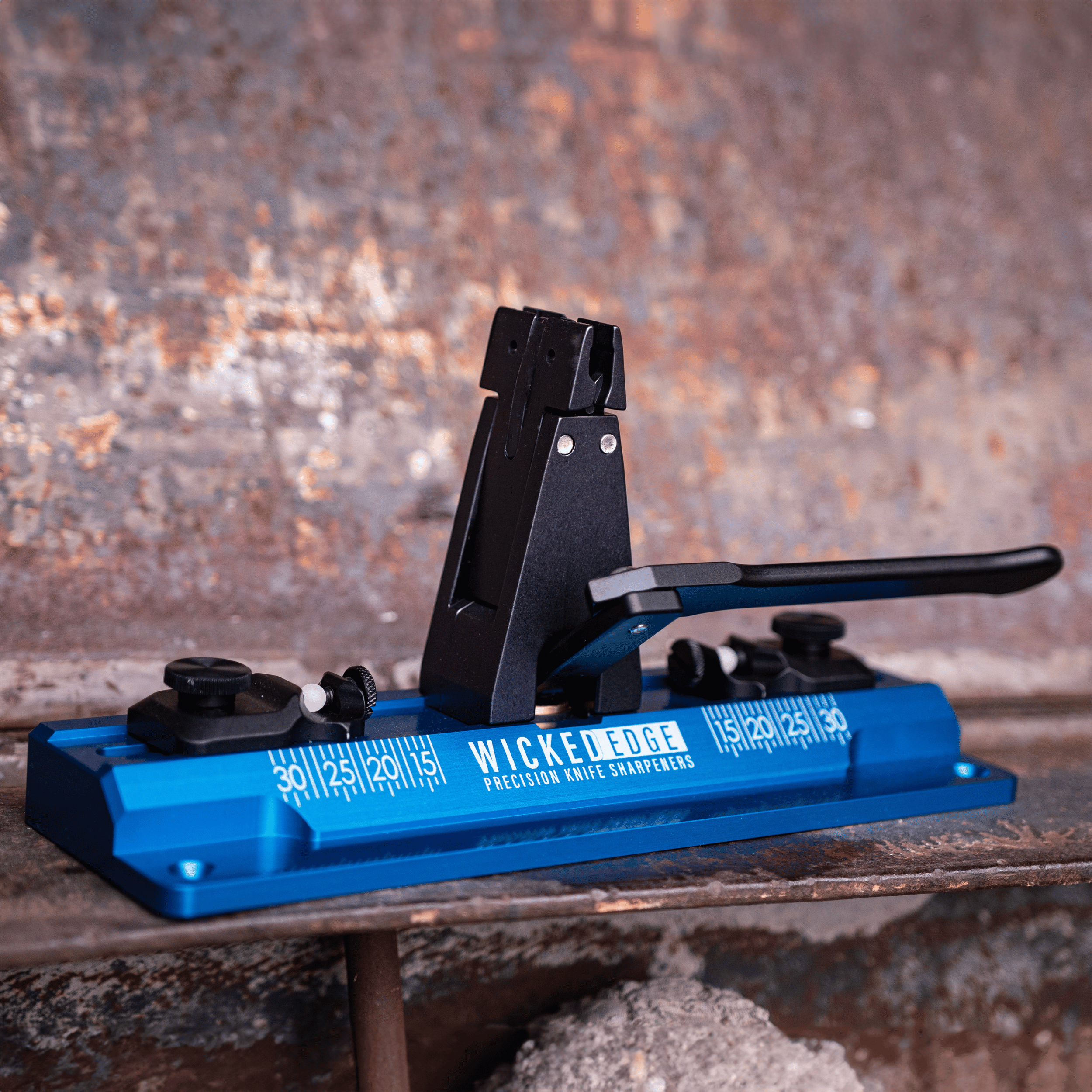
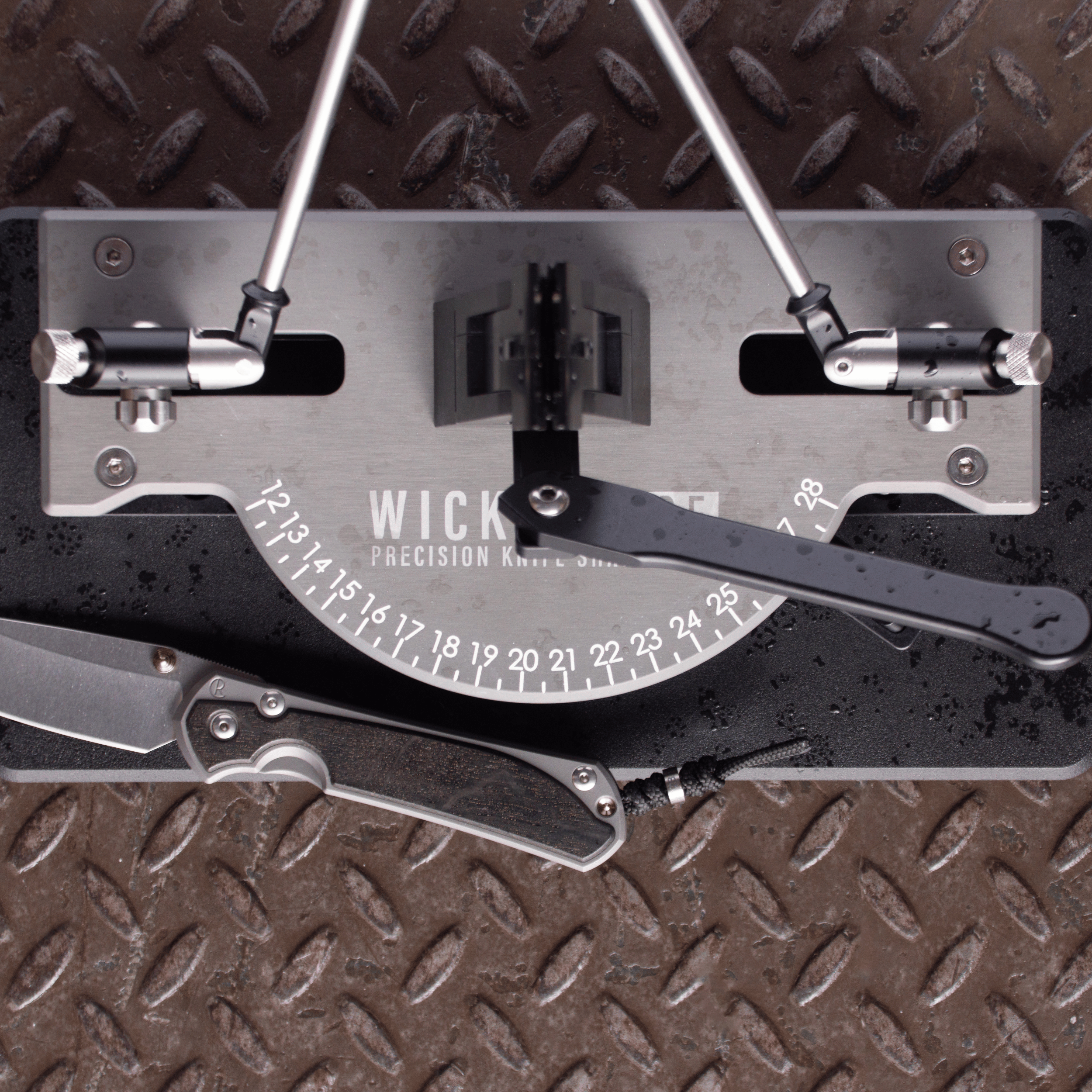
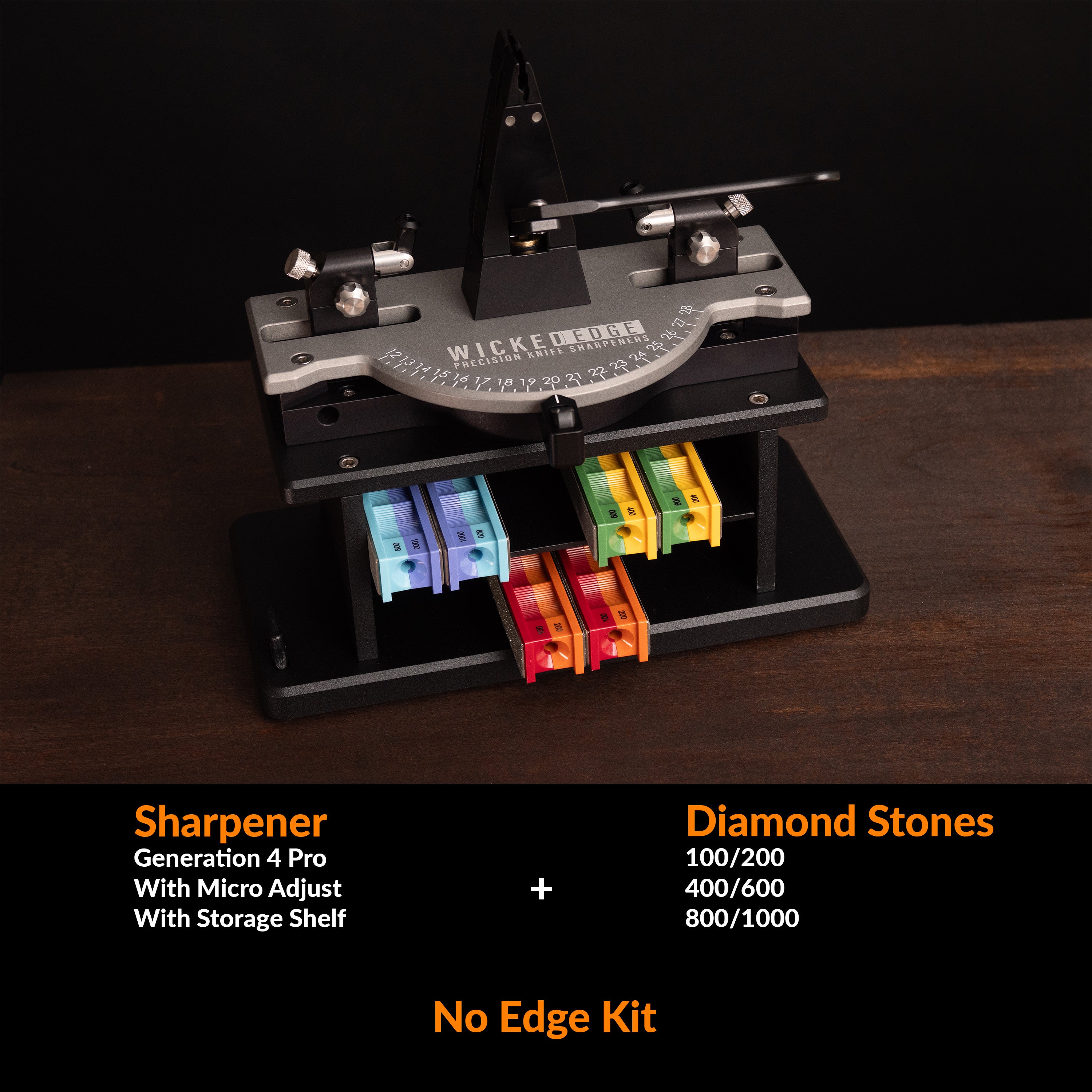
I don't want to say I am a master with the wicked edge but I feel comfortable enough with it to be pretty sure I have made and the smoothed out the burr. I do the sharpie trick and more so I trust my finger to feel when the burr has been created.


To clarify, all edges will have a burr, the burr is simply the extent that the edge has not perfectly apexed. In general I doubt that you can see or feel a burr which is small enough to significantly impact edge retention because such a burr can be only for example 10 microns which is 1/100 of a mm, or 1/10 of of the thickness of standard paper. Yet even at that size it is on the order of 100 times the size it should be for a properly sharpened edge and thus the edge retention would be expected to be very low.

It can not be the hardness alone as the properties which effect edge retention (or in fact anything) are linear in small increments (everything is) so a change of 1-2 HRC can not alone make a dramatic difference. As well consider that a lot of makers/manufacturers use and even prefer much lower hardness levels, one of the most dramatic being Jerry Fisk, well respected smith who uses a hardness on his personal blades just about 50 HRC.

Based on experience with the Sebenza and other blades, you are likely experiencing poor performance from a number of issues the most likely one being that the edge was over heated in the initial grinding. I would suggest :

-make one pass right into the stones to grind a small flat along the edge which clearly reflects light
-apex the edge until it stops reflecting light
-increase the angle dramatically (as in 10-15 dps) and use 1-2 passes per side
-reset the angle and use 10-20 extremely light passes (5-10 grams of load) to remove the heavy micro-bevel

I would suggest going no further than a medium grit, something similar to the brown Spyderco Rods, a 600 DMT, fine India, etc. whatever the WE uses which is close to that. At this stage if the edge forms clean then it should :

-shave easily, just barely hitting the skin with no draw
-push cut newsprint almost on a full 90

If it can not do these, and you can get it to do it on another knife, and the edge was visually apexed (you can see it stops reflecting light) then is is almost always the case that the edge was severely burnt. You can then keep sharpening it hoping the problem with stop - or return it. As well if there is someone close by who can sharpen you can ask them to check to ensure it isn't a technique problem as we are inherently irrational by nature and can be extremely biased even when we think we are not.
Question with a sebe ...
More
Time to create page: 1.34 seconds